KnowYourFood

Blog

  • A Textile Journey in Morocco

    A Textile Journey in Morocco

    The Weaver’s Gift


    The labyrinth of Fes’s medina swallowed me whole as I stepped through the Bab Boujloud gate, my senses assaulted by the chatter of vendors, the tang of leather, and the clatter of looms. I’d come to Morocco on a solo travel whim, drawn by tales of ancient crafts and the promise of a budget-friendly adventure. My backpack held little more than a journal and a few dirhams, but my heart was full of curiosity. I paused at a stall where an old man wove a rug, his gnarled hands dancing over threads of crimson and indigo. “Sit,” he said, his voice gravelly, and I did, watching the pattern emerge. Can a craft teach us patience? I wondered, the question settling as I traced the rug’s edges with my eyes.

    I’d started in Marrakech, bartering for tagine spices and sleeping in a riad with creaky floors, but Fes felt different—raw, unpolished, alive. I wandered the souks, my budget dictating meals of bread and harira soup, each bite a burst of cumin and comfort. One morning, I joined a textile workshop, my hands clumsy as I tried to thread a loom under the watchful eye of Amina, a woman with a quick laugh. She showed me how to dye wool with saffron and madder root, the colors staining my fingers like a painter’s palette. We worked in silence, the dye vats bubbling, and I felt a quiet rhythm take hold.

    The turning point came when Amina invited me to her home for couscous. Her family gathered in a courtyard, the air warm with chatter and the scent of cinnamon. Her daughter, Leila, taught me a few Darija phrases, giggling at my accent, while her grandmother pressed a woven scarf into my hands—a gift, she said, for trying. We ate with our hands, the couscous soft and spiced, and I felt a thread of connection weave through me, stronger than any rug.

    On my last day, I returned to the old man’s stall. He’d finished the rug, its pattern a story of mountains and stars. I bought it with my remaining dirhams, a tangible memory of patience learned stitch by stitch. As I left Fes, the medina’s chaos fading behind me, I knew the answer: a craft doesn’t just teach patience—it builds it, one thread at a time.


    Click here to gear up for your adventure

  • Bazaruto Archipelago

    Bazaruto Archipelago

     Mozambique’s Hidden Paradise


    In the warm embrace of the Indian Ocean, Ricardo found solace and wonder in the secluded Bazaruto Archipelago—a cluster of islands off the coast of Mozambique that seemed to exist in a realm all their own. His journey began with a long boat ride that cut through crystalline waters, each wave inviting him closer to a paradise untouched by the clamor of modern life.

    Upon arrival, Ricardo was immediately struck by the vibrant hues of the islands: sapphire seas, emerald mangroves, and sunsets that painted the sky with fire. Over the course of several days, he immersed himself in island life, exploring hidden coves, snorkeling among coral gardens, and savoring the catch of the day prepared in simple, yet exquisite, local styles. The rhythm of the archipelago was unhurried and deeply natural—a slow, captivating pulse that encouraged reflection and rejuvenation.

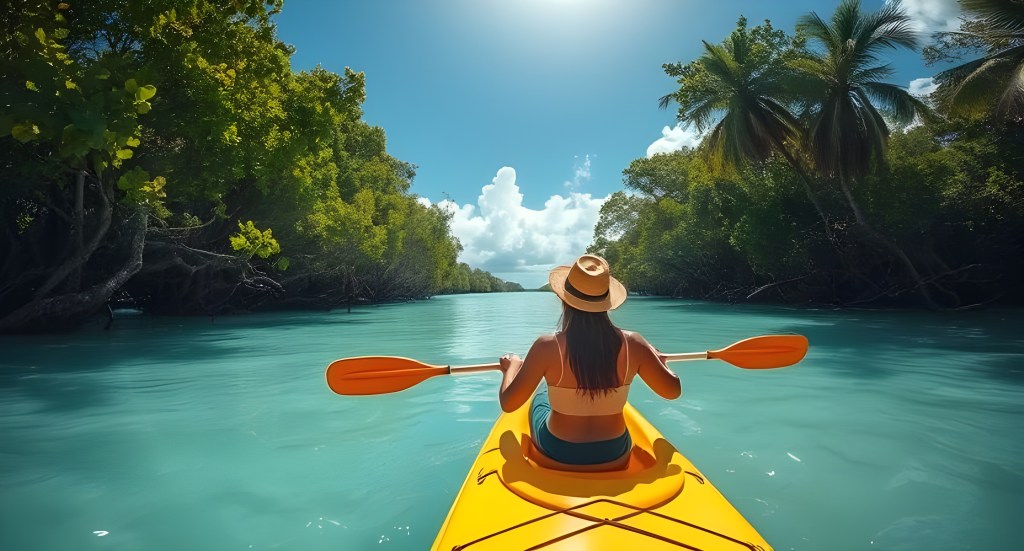
    Ricardo’s days were filled with adventures both on land and beneath the waves. He spent mornings kayaking along winding creeks, where the only sounds were the soft lapping of water and the calls of exotic birds. In the afternoons, he took to the ocean with a local dive master who introduced him to an underwater world of colorful fish, intricate coral formations, and the gentle giants of the sea—the majestic manta rays. Each dive was a revelation, a reminder of the fragile beauty that lay beneath the surface.

    In the evenings, as the island’s rhythm softened into a serene lullaby of distant waves and rustling palms, Ricardo joined small gatherings of locals and fellow travelers. Around communal fires on the beach, stories flowed as freely as the local brew, and every tale was interwoven with the magic of the archipelago. These shared moments of connection and laughter deepened his understanding of how nature, culture, and community could merge into one harmonious experience.

    By the time Ricardo prepared to leave the Bazaruto Archipelago, he carried with him not only a trove of stunning photographs and memories but also a renewed sense of wonder—a quiet conviction that the world’s most extraordinary treasures are often hidden in the quiet corners of nature, waiting to be discovered by those who seek with an open heart.


    Click here to gear up for your adventure


  • A Kayak Quest in Belize

    A Kayak Quest in Belize

    The Lagoon’s Pulse

    The paddle sliced into the turquoise water of Ambergris Caye’s lagoon, the splash cutting through the humid stillness as I leaned into the stroke, my kayak rocking slightly under me. I’d come to Belize for an adventure travel fix, a solo travel paddle through mangroves and reefs, chasing the kind of wild that makes your pulse hum. My gear was basic—waterproof bag, a hat, a cheap life vest—because budget travel kept me lean, every Belize dollar stretched to the edge. The sun beat down, relentless, and as a stingray ghosted under me, a question bubbled up: How much does safety weigh when you’re this far out on your own? The mangroves loomed, dark and tangled, and I figured I’d find out one way or another.

    This kicked off in Belize City, where I’d landed a few days back, crashing in a hostel with a sagging roof and a fan that buzzed like a dying bug. Route planning was my first move—Belize is small, but the cayes are a haul, so I’d snagged a water taxi to San Pedro for $15, a bumpy ride over waves that slapped the hull. Safety was on my mind: I’d read up—keep cash hidden, stick to daylight, watch for rip currents. The city’s markets were my warm-up—bartering for a mango, sipping tamarind juice with a vendor who warned me about lagoon tides. San Pedro was the launchpad, a sandy strip of bars and boats, and I’d rented a kayak for peanuts, plotting a three-day loop through the northern lagoons.

    The first paddle was a jolt. I shoved off from a rickety dock, the water glassy under a sky that promised heatstroke if I wasn’t careful. Budget tips saved me—packed rice and beans in a tin, a filter bottle to dodge bottled water costs—and I’d mapped my route: day one to Bacalar Chico, day two looping south, day three back. The lagoon was alive—pelicans diving, fish darting—and I paddled steady, arms burning by noon. Safety hit hard: no signal out here, no backup, just me and the tide. I’d packed a whistle and a flare—cheap insurance—and kept the shore in sight, a lesson from a forum post about a guy who’d drifted out and nearly didn’t come back.

    Day two turned wild. The wind kicked up, choppy waves rocking me as I pushed toward a reef. A fisherman in a skiff waved me over—Ramon, grizzled and grinning—and tossed me a coconut, machete-hacked open. “Stay close,” he said, pointing at the horizon. “Storm’s coming.” Safety wasn’t just gear; it was listening, so I hugged the mangroves, paddling hard as clouds rolled in. The rain hit like a wall, soaking me through, but I made camp on a sandbar, tarp strung between trees. Ramon’s tip saved me—the storm passed quick, and I ate cold rice by flashlight, scribbling in my notebook as thunder rumbled out to sea.

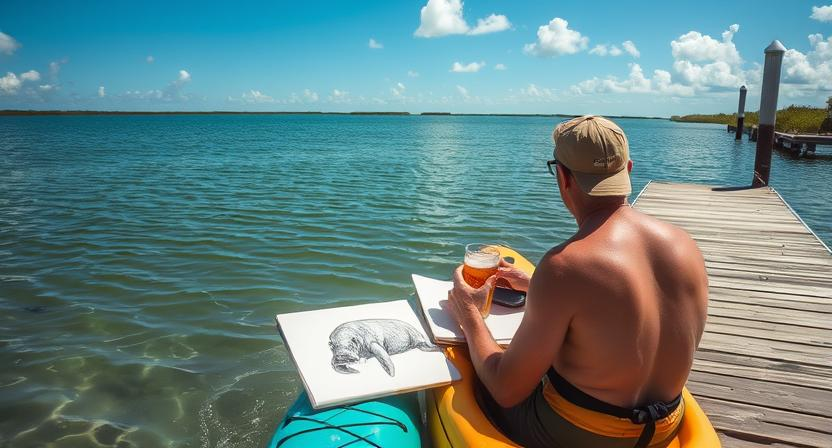
    Day three was the prize. The water calmed, and I paddled into a hidden lagoon, coral glowing under the surface, a manatee surfacing slow and curious. I stopped, drifting, the quiet wrapping around me like a blanket. Adventure travel brought me here, but safety kept me alive—planning the route, packing right, heeding locals. Back in San Pedro, I traded stories with a bartender over a warm Belikin, my skin salty and burned. Belize taught me balance: push hard, but not dumb. That question? Safety weighs everything when you’re alone—it’s the difference between a story and a headline.